

Inside this article:

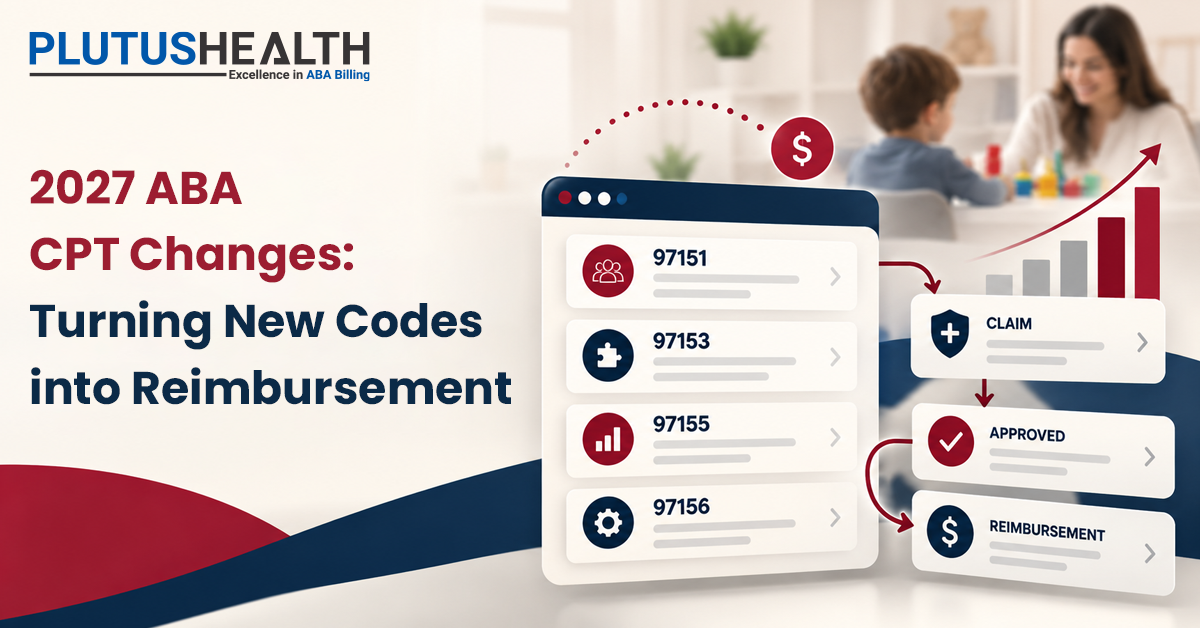
Six new adaptive behavior CPT codes are officially part of the 2027 CPT code set and will take effect on January 1, 2027. These additions come alongside revisions to eight existing Category I codes (97151–97158) and the deletion of two temporary Category III codes (0362T and 0373T).
For ABA providers, however, the bigger story starts after the codes become active.
A CPT code provides a standardized way to report a healthcare service. It does not automatically determine whether every payer will cover, authorize, or reimburse the service at a particular rate. That makes CPT 2027 more than a coding update. It is also an ABA revenue cycle readiness issue.
What Is Changing for ABA in 2027?
The American Medical Association (AMA) released the CPT 2027 code set on September 9, 2026, with 453 editorial changes across healthcare, including 299 new codes, 74 revisions, and 80 deletions.
Here's what's changing on January 1, 2027:
- 6 new Category I CPT codes: 97148, +97149, 97159, +97160, 97173, and 97180.
- 8 revised Category I CPT codes: 97151 through 97158.
- 2 deleted Category III codes: 0362T and 0373T.
The updated adaptive behavior code set includes 14 Category I codes. ABA providers should review the complete descriptors and reporting guidelines to prepare their clinical documentation, authorizations, and billing workflows.
2027 ABA CPT Codes: New and Revised
Codes Being Deleted
The Category III codes 0362T and 0373T are being deleted as part of the 2027 update. ABA providers should review the new Category I codes for harmful behavior assessment and treatment, along with the applicable reporting requirements, before transitioning their billing workflows.
Key Changes for ABA Providers
The changes take effect January 1, 2027. ABA providers and billing teams should review the complete updated code set because the transition involves existing adaptive behavior codes as well as the six additions.
Why 97180 Is Getting Attention
Among the new codes, 97180 stands out because it provides a reporting pathway for qualifying clinical work performed outside a face-to-face session by a physician or other qualified healthcare professional.
According to the ABA Coding Coalition, qualifying activities can include reviewing treatment data and session notes, making clinical decisions about treatment targets or protocols, developing or modifying assessment protocols, creating discharge or transition plans, and certain treatment protocol review or training activities with technicians. For ABA providers, this creates a new question beyond whether the work can be reported:
How will individual payers handle it?
That is where CPT 2027 moves from a coding conversation into a reimbursement conversation.
A New CPT Code Does Not Automatically Mean New Revenue
CPT provides a common language for identifying and reporting healthcare services. The code itself does not establish universal payer coverage or a guaranteed reimbursement amount.
The ABA Coding Coalition notes that continued carrier pricing means providers will need to continue negotiating reimbursement rates with payers. Whether dealing with Medicaid, Tricare, or commercial insurance, payment mechanisms differ.
Before January 1, 2027, revenue cycle teams should be asking:
- Which contracted payers have released guidance for the new codes?
- Will new or updated authorizations be required?
- What documentation requirements will apply?
- Are there specific provider qualification requirements?
- Have reimbursement terms or fee schedules changed?
- Are billing systems ready for the revised code set?
- Who will monitor early denials and payment differences after go-live?
These questions determine whether a coding change becomes a smooth transition or a revenue cycle problem.
What Could Go Wrong After January 1, 2027?
The first weeks of implementation will matter.
New and revised codes introduce changes that billing teams, clinical teams, payers, and technology systems need to process correctly. Problems may only become visible once claims begin moving through the revenue cycle.
An authorization may not align with the service being billed. Documentation may not meet a payer's requirements. Payment may also differ from what the organization anticipated. Instead of waiting for these issues to accumulate in accounts receivable, ABA organizations should closely monitor early 2027 claims by:
- Payer
- CPT code
- Denial reason
- Reimbursement
- Authorization status
- AR aging
Patterns across multiple claims can help revenue cycle teams distinguish an isolated issue from a larger payer or workflow problem.
How Plutus Health Can Help ABA Providers Navigate CPT 2027
Plutus Health combines experienced ABA RCM specialists with OlympusAI to help organizations manage revenue cycle workflows at scale. OlympusAI brings Agentic AI, Payer Intelligence, and analytics into RCM workflows, while experienced teams manage payer-specific situations and exceptions that require human intervention.
Preparing for CPT 2027 requires coordination across the ABA revenue cycle. For ABA organizations navigating the CPT 2027 transition, this operating model can support several areas.
- Authorization visibility: Track authorization status and identify issues that could affect services moving into billing.
- Claim readiness: Support billing workflows around applicable payer requirements before claims are submitted.
- Payer follow-up: Manage follow-up when claims involving new or revised codes require additional payer action.
- Denial intelligence: Analyze denial patterns and root causes instead of repeatedly working the same downstream problem.
- Payment monitoring: Track reimbursement behavior and surface unexpected payment patterns for further investigation.
- AR management: Identify unresolved billing and payer issues before they move deeper into aging AR.
Agentic AI can help monitor workflows and surface exceptions at scale, while ABA RCM specialists address the payer and operational situations that require human judgment. The goal is to identify CPT-related revenue issues early, understand their root cause, and act before they become persistent denials or aging AR.
Your ABA CPT 2027 Readiness Checklist
Before January 1, 2027, confirm that your organization has:
- Reviewed the complete 2027 adaptive behavior code changes
- Identified guidance from your contracted payers
- Reviewed applicable authorization requirements
- Updated relevant billing and practice management configurations
- Aligned clinical documentation with applicable requirements
- Prepared clinical and revenue cycle teams for the transition
- Established early denial monitoring by payer and CPT code
- Established a process for reviewing unexpected reimbursement differences
Being ready means more than having the correct ABA codes loaded into your billing system. Clinical, authorization, ABA billing, denial management, and collections workflows need to work together once claims start moving.
The faster an ABA organization can distinguish an isolated claim problem from a payer-wide or workflow pattern, the faster it can respond. Plutus Health can help identify gaps across your ABA revenue cycle before and after the CPT transition.
Get Your Free RCM Assessment

Balaji Ramani
Balaji Ramani has more than 20+ years of experience in Healthcare Revenue Cycle Management. Balaji has expertise in building, training, mentoring, and managing end-to-end healthcare RCM teams. He has experience using the Web for information sourcing, research & analyses to enable ‘patient and payer satisfaction’ in the healthcare space.